We resurrected the user survey for the 2023-24 season. We’ve changed some of the questions in the 23-24 survey so we couldn’t directly compare every measure to previous years. We have included this data where possible though.
We can compare this to data from the user surveys from 2018 – 2020. We don’t have data for the 2021-22 and 2022-23 seasons as the user survey wasn’t run those years.
Overview
- We’ve had a higher percentage of respondents say they’d check their drugs before taking them than any other year so far
- 78% of respondents say that KYSNZ has changed the way they take drugs
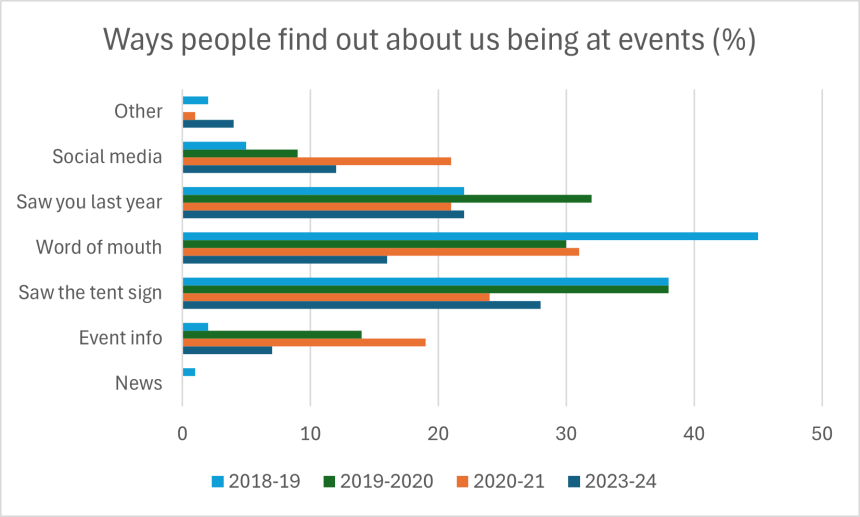
- Word of mouth, having a visible tent at festivals, and being seen in previous years continue to be primary way clients find us
- 89% of people reported changing to safer behaviours as a result of the service
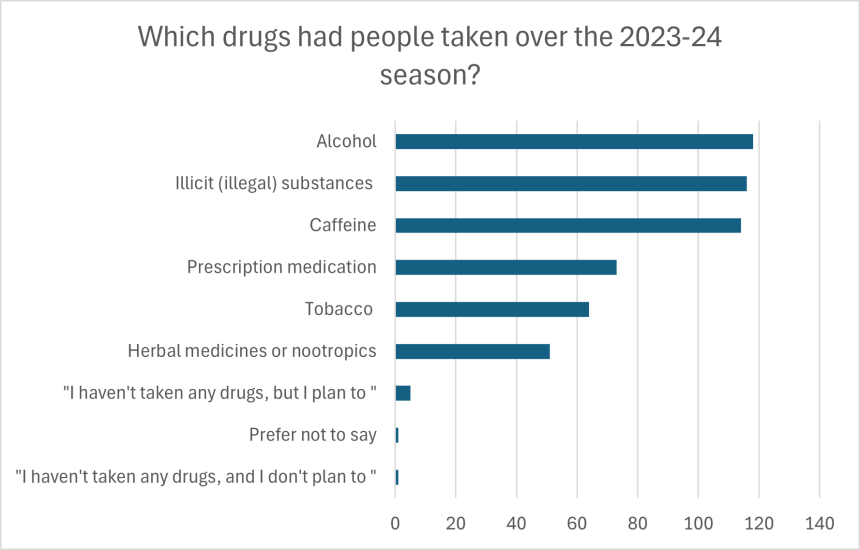
What drugs have people taken this year?
Alcohol was the most popular drug of choice for people that took our survey, followed very closely by illicit substances and caffeine. Only one person said that they had not taken drugs in the 2023-24 season and didn’t plan to.
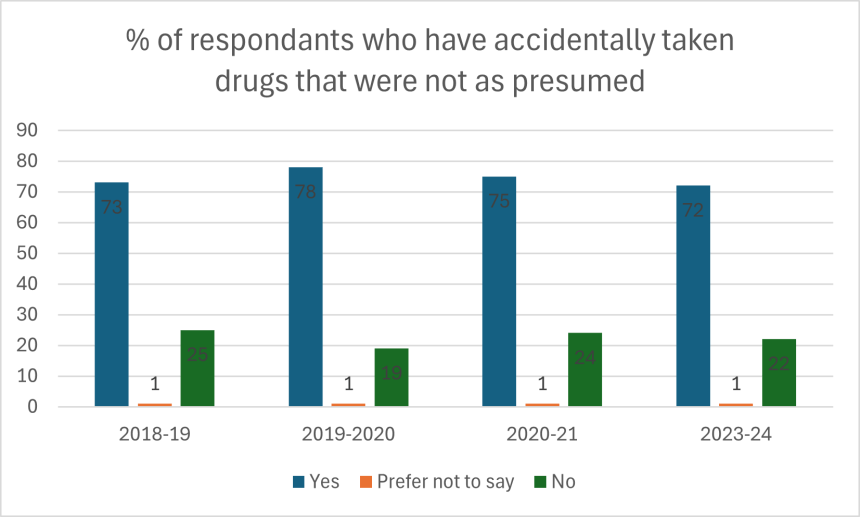
Are people still having experiences where the drugs they’ve taken haven’t been as presumed?
The percentage of people that have had their drugs turn out to be not as presumed is still very high – 72% of respondents this year stated they’ve had substances turn out to be something else.
2018-19: Yes = 211, Prefer not to say = 4, No = 71
2019-20: Yes = 108, Prefer not to say = 2, No = 27
2020-21: Yes = 513, Prefer not to say = 9, No = 162
2023-24: Yes = 97, Prefer not to say = 2, No = 29
This year we asked people to describe what effects the drugs they’d taken had in comparison to what they were expecting. Most concerning, almost ⅓ of respondents said that the effects were something entirely different from what was expected.
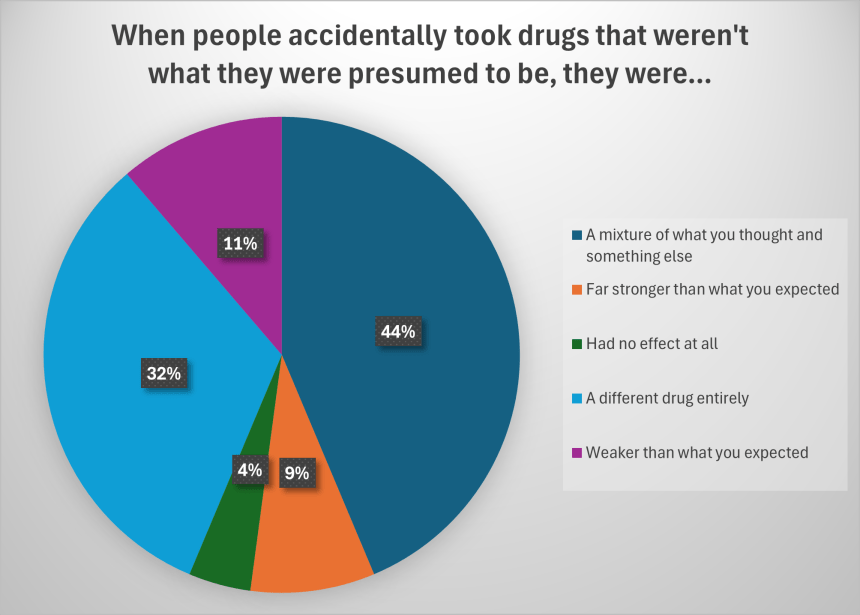
N= 96 respondents
People’s experiences when this happens are still felt to be undesirable, too.
Yes, I took what I thought was MDMA at a party and it made me feel suicidal, which is not a feeling MDMA has ever given me any other time. I was extremely scared and felt like I was losing my mind. To this day I’m certain it wasn’t MDMA.– Respondent, 2018-2019
MDMA powder was either cut or something different. Was a terrible come down with bad anxiety and unable to sleep – Respondent, 2019-2020
Mistaken ketamine for speed, I would know what is on the other side of the black hole of the universe! – Respondent, 2020-2021
MDMA that was methamphetamines and caffeine. Resulted in throwing up and sort of anxiety attacks- I got it tested after – Respondent, 2023-24
MDMA, but I’m pretty sure it was cathinones. I had already taken it before I got it tested. Gave me the worst depression for a week, felt suicidal – Respondent, 2023-24
Who is using KnowYourStuffNZ?
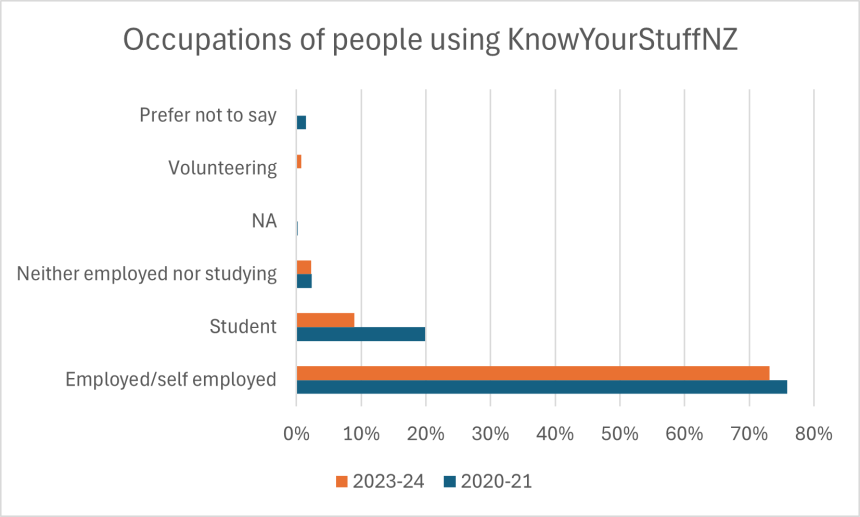
While we can’t take identifying details from our clients, we can ask them their age, and what their occupation is (broadly).
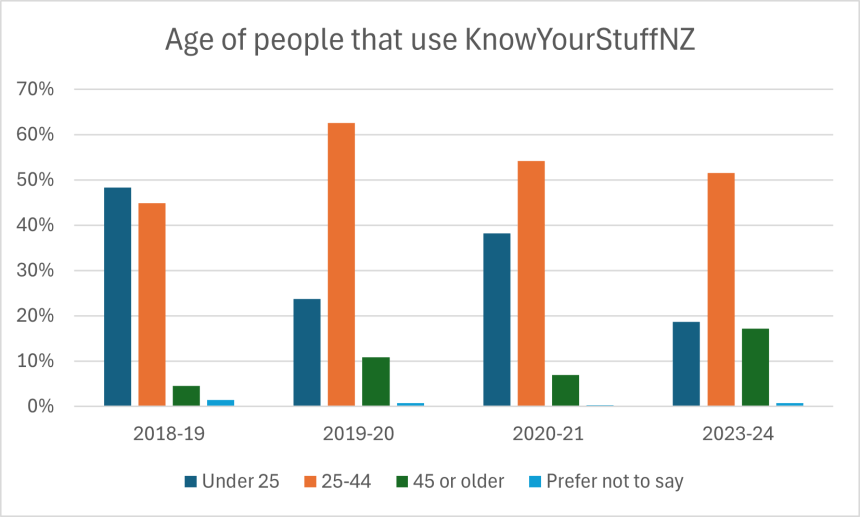
The majority of people who took the survey this year were between 25 and 44 years old.
Please note this data will be skewed according to how much effort went into finding survey respondents at each festival (generally the largest festivals have a younger demographic, and our staff are often too busy to distribute the survey, so younger demographics will be under-represented here).
How are people finding out about us at events?
Word of mouth, having a visible presence at events, and clients expecting our presence after using our services in previous years remain the main way people find us at events. It is interesting to note that social media and event information have increased in use since the law change in 2021.
We only have 2 years’ worth of data for peoples’ occupations. However this shows that the majority of the people that are getting their drugs checked with us are employed.
Are people using harm reduction organisations?
We continue to be the only source of harm reduction advice for over 80% of respondents. There has been a slight increase in people using other harm reduction organisations since the 2020-21 season.
This indicates that drug checking services like KnowYourStuffNZ provide a valuable point of contact for drug users who otherwise don’t access these services.

2018-19: Have used other HR orgs = 32, Prefer not to say = 2, Have not used other HR orgs = 253
2019-20: Have used other HR orgs = 13, Prefer not to say = 1, Have not used other HR orgs = 123
2020-21: Have used other HR orgs = 70, Prefer not to say = 2, Have not used other HR orgs = 607
2023-24: Have used other HR orgs = 19, Prefer not to say = 2, Have not used other HR orgs = 110
We also asked people how many times they’ve used our service. Not everyone answered this question, but the limited numbers do indicate that most people are using the service for the first time or have used it once or twice before.

How people reduce harm
The trend of the majority of people checking their drugs before they take them continues this year. This could be due to increasing public awareness around drug substitution and the risk profiles of drugs currently in circulation.
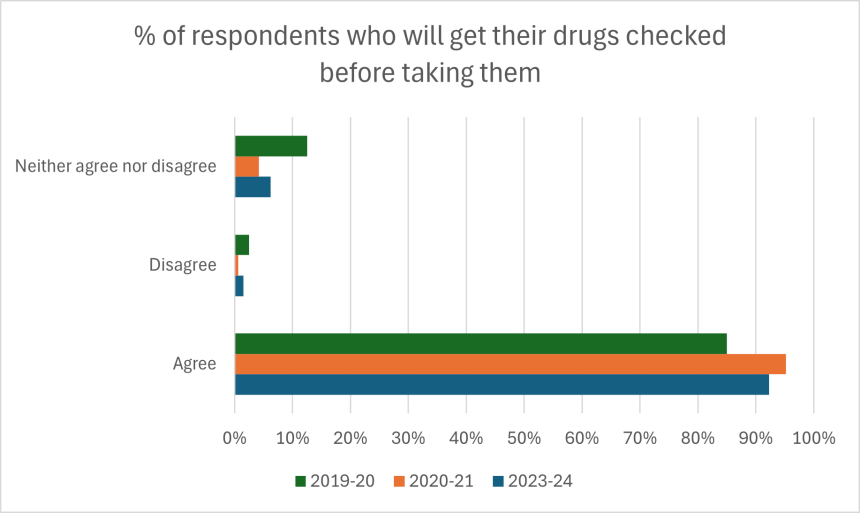
2019 – 2020 N= 40, chose not to respond: 135
2020 – 2021 N= 167, chose not to respond: 514
2023 – 2024 N= 129, chose not to respond: 5
This season we asked people about the different types of harm reduction that they were doing as a result of talking to us. We also made a note of how many different types of harm reduction measures they were taking.
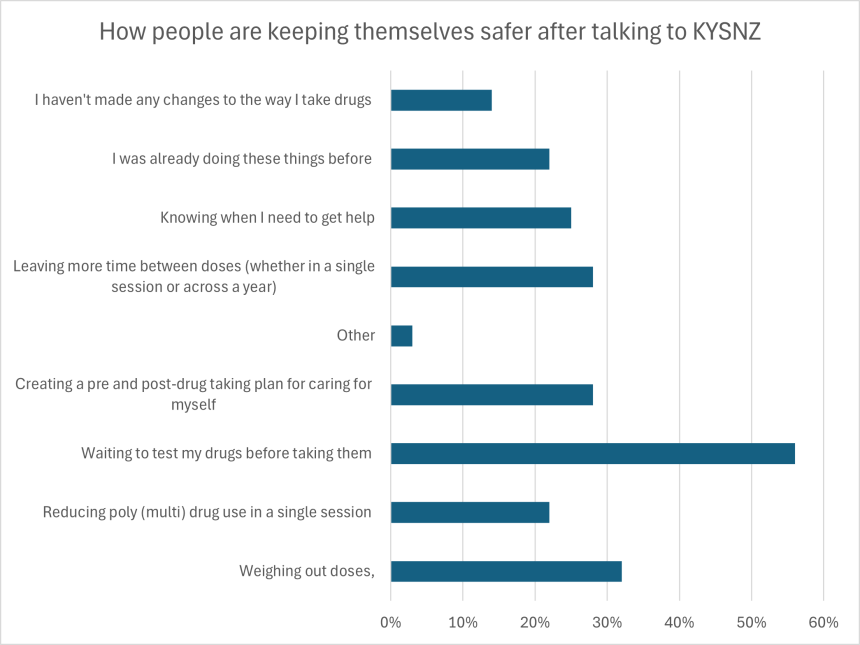
The main harm reduction method is people choosing to get their drugs tested, followed by weighing out their dose instead of just estimating it.

N=134 respondents
Most respondents had one method of harm reduction as a result of talking with KYSNZ, which was mainly getting their drugs tested before taking them. The most common harm reduction method combinations were getting their drugs tested before taking them and weighing out their doses. Reducing polydrug use and making sure they had a pre- and post- care plan also rated highly when more than one method was used.
What does this mean?
The evidence continues to show that drug checking services positively impact people’s drug-taking behaviour. People report using a number of high-impact harm reduction methods including getting their drugs tested before consuming them, leaving more time between doses to let their bodies return to baseline, and reducing polydrug use in a single session (including alcohol).
Evidence from our Testing Reports shows that people are much less likely to consume a substance when it is not what they thought it was, potentially reducing the amount of acute drug harm. Evidence from these client surveys shows that drug checking is a critical harm reduction tool to reach people who may not interact with other alcohol or drug services and has positive impacts on longer-term drug taking behaviours.