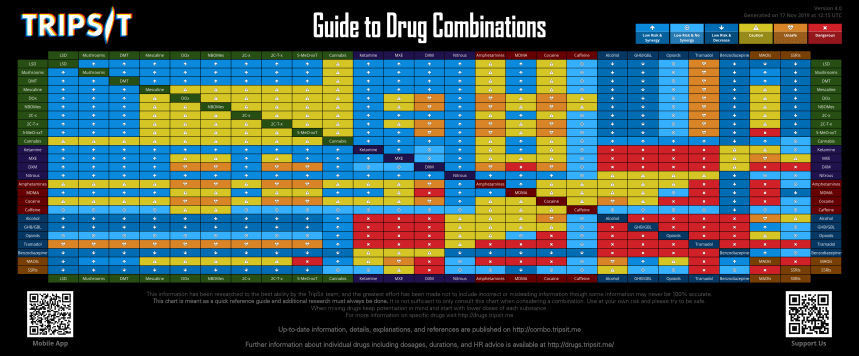
Tripsit’s updated drug interaction chart is excellent and makes us super happy.
Open the chart in a new tab to zoom in
New substances added
There are two new cathinones added to the interaction chart.
Alpha PVP
4MMC (also known as mephedrone)
These aren’t exactly common drugs in Aotearoa, but they are definitely available and are a worthy addition to the interaction chart.
New definitions
The updated chart has also added some new interaction definitions, too.
Keep in mind that when you take more than one drug at a time (and yes, that does include alcohol, don’t make us tap the sign) each drug has its own risk profile, so you’re increasing your chances of having a negative experience. And some substances definitely don’t play well with others.

Blue
These are the lower risk combinations. There are still risks, but they’re less likely to wind you up in hospital.
Low risk and synergy
This means that the two substances you’re thinking about taking have a low risk of physical harm or toxicity, and work together to give a greater effect. If you’re practicing good harm reduction, you’ll have the kind of adventure you anticipate.
Low risk and no synergy
This means that if you take these two substances together you’re unlikely to come to physical harm, but the drugs won’t react to each other to give you a stronger effect.
Low risk and decrease
Does what it says on the box. While you have a lower risk of physical harm from combining these two substances, they’ll cancel each other out, and you won’t feel any effects.
This is where people can get into trouble because they’re tempted to take more of either/both substances so they feel the high they’re going for, which can lead to toxicity and a not-fun trip to hospital.
Yellow
Yellow means that mixing these two substances has a moderate risk of physical harm or toxicity. They probably won’t put you in hospital, but you’ll definitely not have the time you anticipated, and it won’t be in a good way.
For example, mixing cannabis with psychedelics like LSD sounds relatively harmless because these substances both have a low risk profile and they’re relatively well known. But both of these substances have a risk of anxiety and paranoia, and with their powers combined you could potentially wind up having a harrowing time and needing some time in the chill space.
Orange
Orange is where the risk of physical harm or toxicity is pretty high and also pretty likely. If you’re having a harm reduction chat with one of our volunteers, this is a combination that they’d warn you about if you have one of the substances on the chart.
For example, mixing stimulants like cocaine, amphetamines, or MDMA with alcohol gets an orange tag because the stimulant cancels out how drunk you feel, so you drink more because you don’t feel drunk. And when the stimulant wears off the alcohol’s effects kick in and you can go from 0 to vomit/passing out in a very short amount of time.
Red
Red combinations carry the kinds of risks that can either put you in hospital or straight up kill you. We think the world is better with you in it, so we recommend you avoid combinations that have a red tag.
For example, mixing a like alcohol with other downers like ketamine, GHB/GBL, benzos, or tramadol increases your risk of passing out. If you vomit while you’re passed out you won’t be able to move your head to clear said vomit out of your airways, and may drown. This is why we recommend trip-sitters put their friends in the recovery position if they pass out.
Further reading
If you’re curious about your substances and how they react with other substances, Tripsit and Psychonaut Wiki are good places to start. Or if you’ve got specific questions you can fire us an email or slide into our DMs on Facebook, Instagram, or TikTok.